For more than a thousand years, Płock has been shaped by faith, culture and history. The Diocesan Museum brings those stories together under one roof and across two remarkable historic buildings.
Few Polish cities can trace their story as far back as Płock. Once the seat of the Masovian dukes and one of the country's most important religious centres, the city has accumulated centuries of artistic, cultural and political heritage. The Diocesan Museum brings those stories together, inviting visitors to explore more than a millennium of history through two remarkable buildings that stand within the city's historic cathedral district.
Where Płock's Story Begins
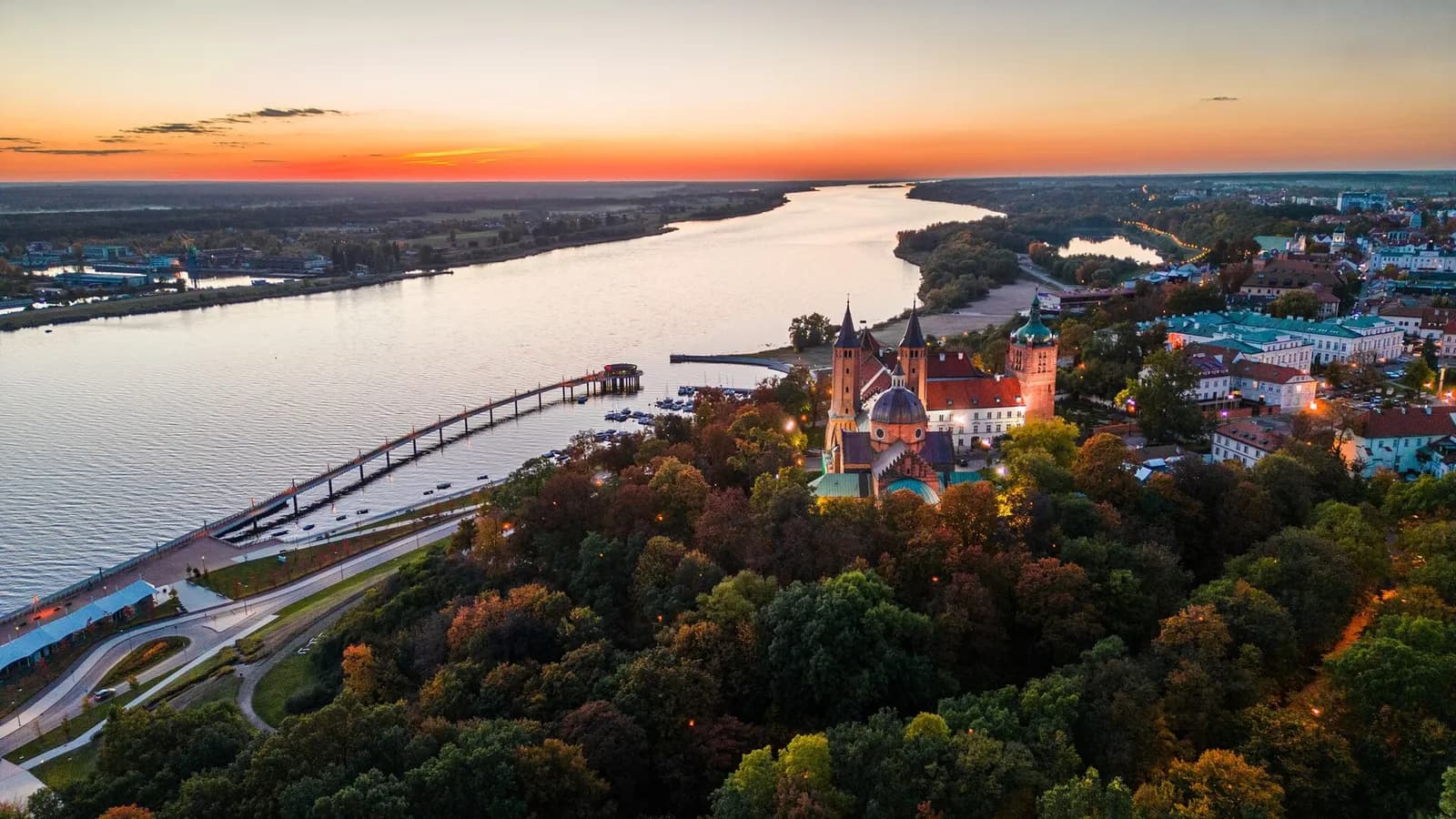
The story begins on Tumskie Hill, where the earliest settlement emerged during the tenth century. Its strategic position above the Vistula River helped establish Płock as one of medieval Poland's most important centres of power. Over the centuries, the hill became home to a fortified stronghold, a ducal residence, a cathedral and the seat of the Diocese of Płock, founded in 1075. As the city grew, its religious and political importance shaped the development of Mazovia, leaving behind a remarkable concentration of monuments that continue to define Płock's historic skyline.
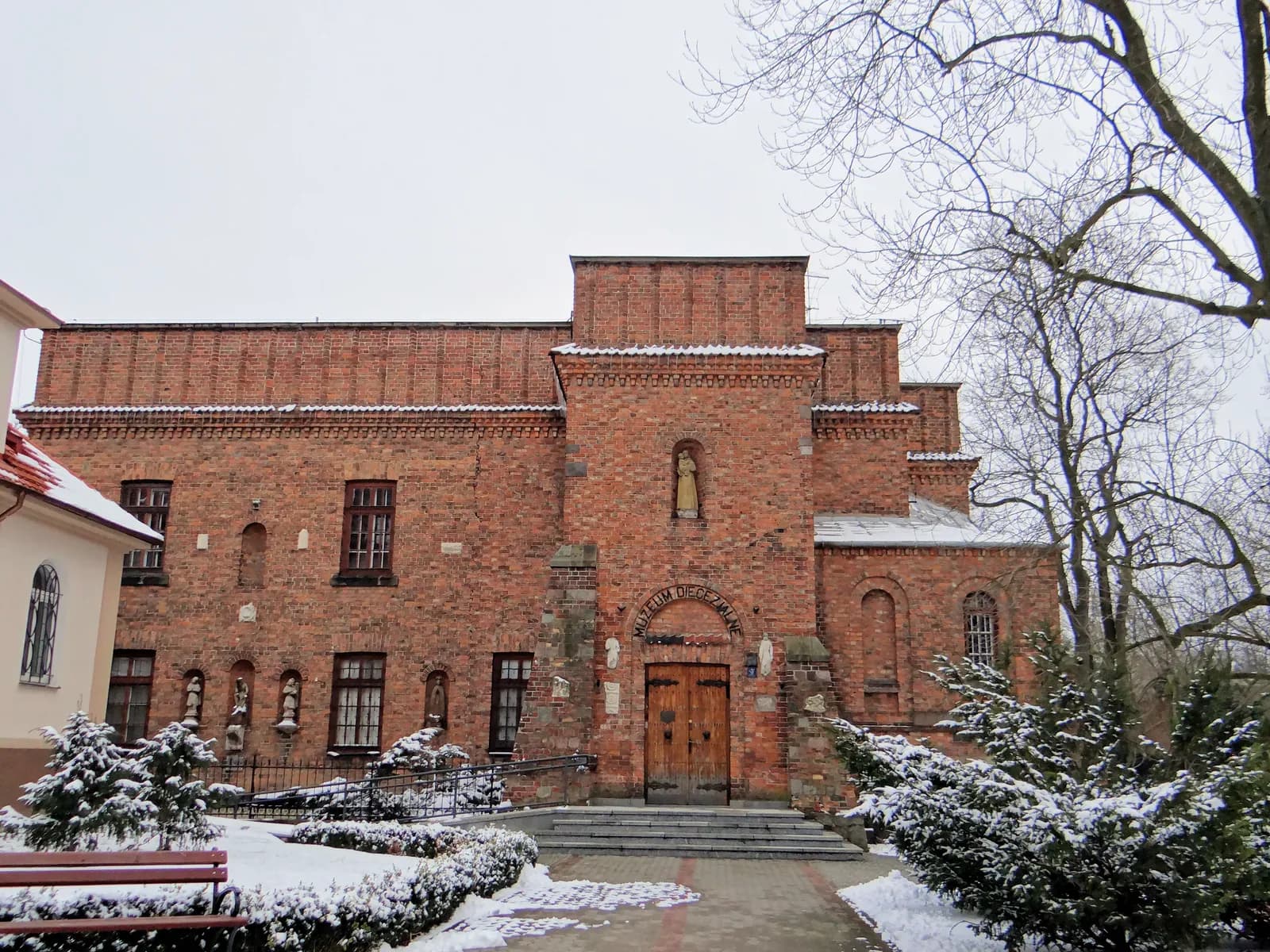
The Diocesan Museum was established in 1903 through the initiative of Blessed Archbishop Antoni Julian Nowowiejski with the aim of safeguarding the artistic and religious heritage of the Diocese of Płock. It opened to the public the following year in a purpose-built museum designed by architect Stefan Szyller, whose architecture echoes nearby Płock Cathedral. As the collections expanded, so too did the institution, gaining additional exhibition galleries, storage rooms, a conservation workshop and a specialist library. Despite suffering losses and damage during the Second World War, the museum recovered and continued to grow, adding a second historic home in 2008 within the former Benedictine Abbey.
Two Buildings, Two Perspectives on History
Today, the museum is divided between two distinct buildings that complement one another while offering visitors very different experiences.
The former Benedictine Abbey stands on one of Płock's oldest historic sites, where centuries of religious and political life intersect. The complex occupies part of the former castle grounds and reflects the city's evolution from an early medieval stronghold to an important ecclesiastical centre. Its contemporary exhibition spaces display some of the museum's greatest treasures, including the Chalice of Konrad of Masovia, the Herm of Saint Sigismund crowned with a Piast diadem and an outstanding collection of Gothic monstrances. Visitors can also discover the celebrated twelfth-century Płock Bible, the exhibition Christ in Art and the paintings of Wiesława Kwiatkowska, bringing together medieval masterpieces and later artistic traditions under one roof.
A short walk away, the museum's original building offers an entirely different atmosphere. Opened in 1904, it has retained the character of one of Poland's earliest church museums, preserving the feeling of a nineteenth-century treasury of historical artefacts. Rather than presenting its collections in a contemporary gallery setting, its rooms invite visitors to explore them much as earlier generations once did. Illuminated manuscripts, archaeological discoveries, paintings, sculptures, liturgical objects, edged weapons, historic textiles, numismatics and one of Poland's most significant collections of kontusz sashes reveal the remarkable breadth of the museum's holdings and the many ways in which the region's history can be understood.
Experiencing both buildings offers a broader perspective than either could provide alone. While the Abbey presents exceptional works within a modern exhibition environment, the Old Museum preserves the atmosphere of the institution's earliest years, allowing visitors to appreciate not only the collections themselves but also the history of collecting and preserving cultural heritage.
The Diocesan Museum offers far more than an introduction to religious art. It invites visitors to discover how more than a thousand years of history continue to shape Płock through its architecture, artistic traditions and cultural heritage. Across two historic buildings, the museum preserves the story of a city whose past remains woven into every corner of its cathedral hill.
Visitor Information
Diocesan Museum - ul.Tumska 3A, Płock
Opening Hours
Tuesday-Friday: 10:30-14:00
Saturday: 10:00-16:00
Sunday-Monday: Closed
Admission
Exhibitions in both the Abbey and the Old Museum
Regular: 20 PLN
Reduced: 10 PLN
Family: 30 PLN (up to four people, maximum two adults)
Free: Children up to 7 years old and eligible groups
Single Building Admission
Regular: 10 PLN
Reduced: 5 PLN
Temporary Exhibitions
Regular: 5 PLN
Reduced: 3 PLN