In Wiączemin Polski, the story of Vistula settlement survives not only in museum objects, but in buildings, interiors and landscapes brought together for visitors.
The history preserved at the Open-Air Museum of the Vistula River Settlement in Wiączemin Polski began long before the museum itself opened. It grew from years of field research by the Masovian Museum in Płock into a project centred on the material remains of Olęder communities that settled along the Vistula.
The Masovian Museum now holds Poland's largest collection of Olęder memorabilia. Its holdings include painted chests of drawers, sideboards, tables and benches, alongside carpentry tools and agricultural equipment. Churns, presses, kettles used for making beetroot jam and barrels for storing and transporting dried fruit provide an insight into the practical character of everyday life.
From fieldwork to a museum
The museum's work in the "land of the Olenders" began in 2005, when staff from the Masovian Museum and researchers from the Institute of Ethnology and Cultural Anthropology at the University of Warsaw undertook their first field trip.
Research intensified in 2011 and 2012, with field studies and inventories of properties. The work also led to the museum's exhibition Olander Settlement in Mazovia, presenting the findings of this research.
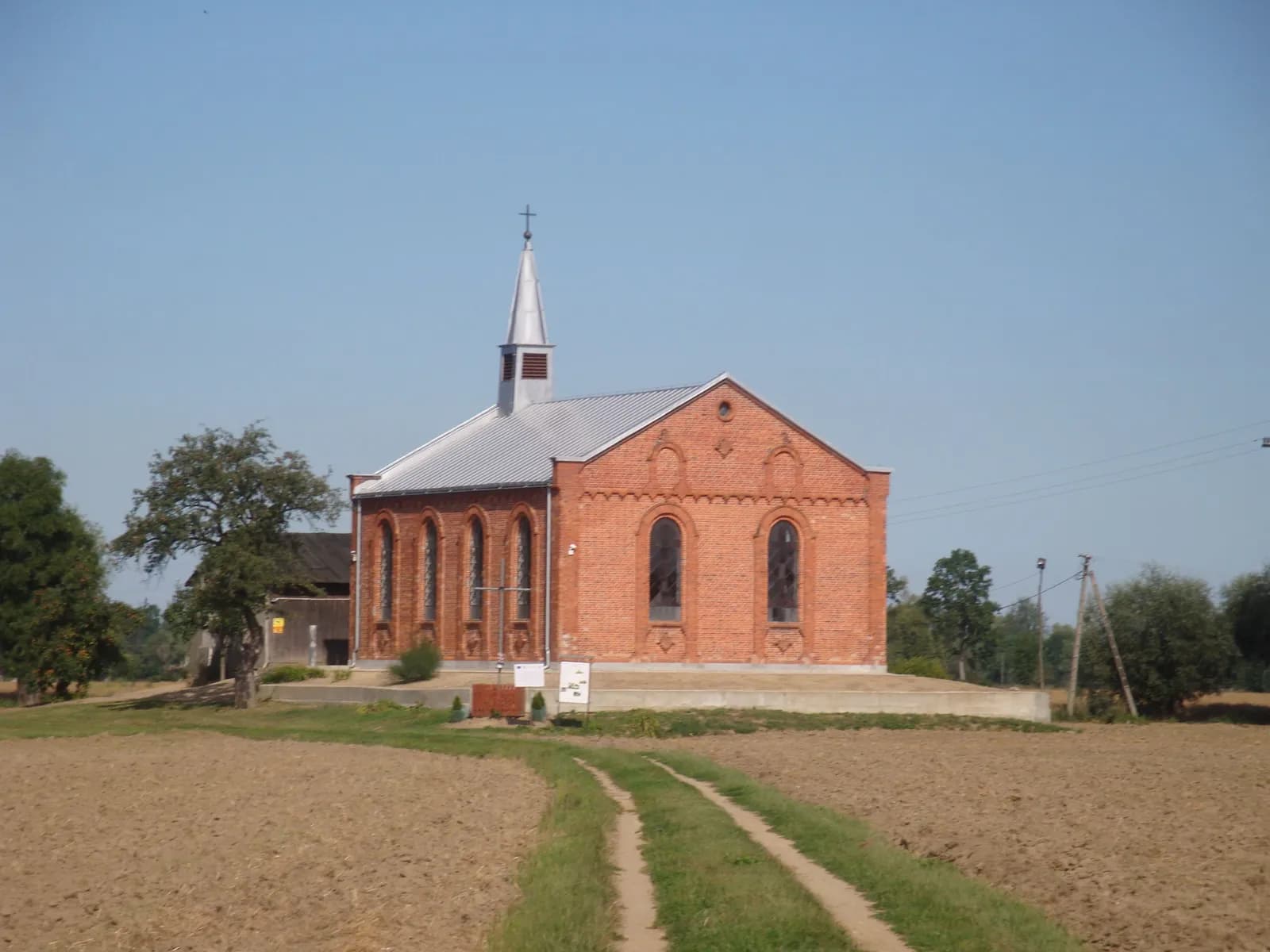
A significant step followed on 25 July 2013, when the Masovian Museum purchased a 2.27-hectare site in Wiączemin Polski. The property included a disused Lutheran church built in 1935, a primary school and a cemetery.
The site provided the foundation for a more ambitious approach to preserving Olęder heritage. Objects gathered from former Olęder settlements were acquired and conserved, including household furniture, equipment associated with drying and making jam, dairy equipment, carpentry tools and ironing equipment. Conservation was supported by funding from the Ministry of Culture and National Heritage.
In 2015, the project to adapt the Evangelical-Augsburg church for the open-air museum was completed. The restored building was officially opened to the public on 27 June that year during the annual St John's Day celebration. The occasion included an ecumenical service, a lecture by Jerzy Szałygin on Dutch settlement in the Płock area, musical performances and the traditional floating of wreaths on the Vistula.
A settlement preserved through its buildings
The museum subsequently expanded beyond the church. Historic Olęder buildings were relocated to the site, furnished and adapted for visitors as part of the expansion project designed to improve access to cultural resources.
Today, the open-air museum brings several elements of an Olęder settlement together. The renovated Lutheran church stands beside the restored cemetery, while farm buildings represent different aspects of rural life.
One of the most distinctive structures is a single-building langhoff relocated from Kępa Karolińska. It combines residential space with a barn and cowshed, bringing domestic and agricultural functions together under one roof.
A group of buildings from Białobrzegi provides another perspective. It consists of a residential building, barn and a jam factory that also served as a fruit-drying room. The former school has also been renovated.
Inside these buildings, permanent exhibitions recreate aspects of traditional Olęder interiors. Residential rooms such as the bedroom are furnished with period objects, while agricultural areas contain equipment used for work on the farm.
These objects were not gathered simply as isolated museum pieces. They were collected from inhabitants of former Olęder settlements during the museum's fieldwork, connecting the buildings with the communities whose history they represent.
The culmination of the project came on 14 October 2018, when the Vistula River Settlement Open-Air Museum in Wiączemin Polski was officially opened. Thousands of people from across Poland attended the event as the new branch of the Masovian Museum welcomed its first visitors.
The museum now provides a setting for exploring the history of settlers from Friesland, Flanders and Germany who established communities in the region from the 17th century to the middle of the 19th century. Through the combination of buildings, objects and preserved surroundings, Wiączemin Polski offers a tangible connection to a chapter of Vistula history that might otherwise survive only in records and individual collections.
Visitor Information
Address: Wiączemin Polski 25, 09-533
Opening hours: Monday closed; Tuesday–Sunday, 10:00–16:00
Tickets: PLN 15 full price; PLN 10 concession
Last admission: 45 minutes before closing